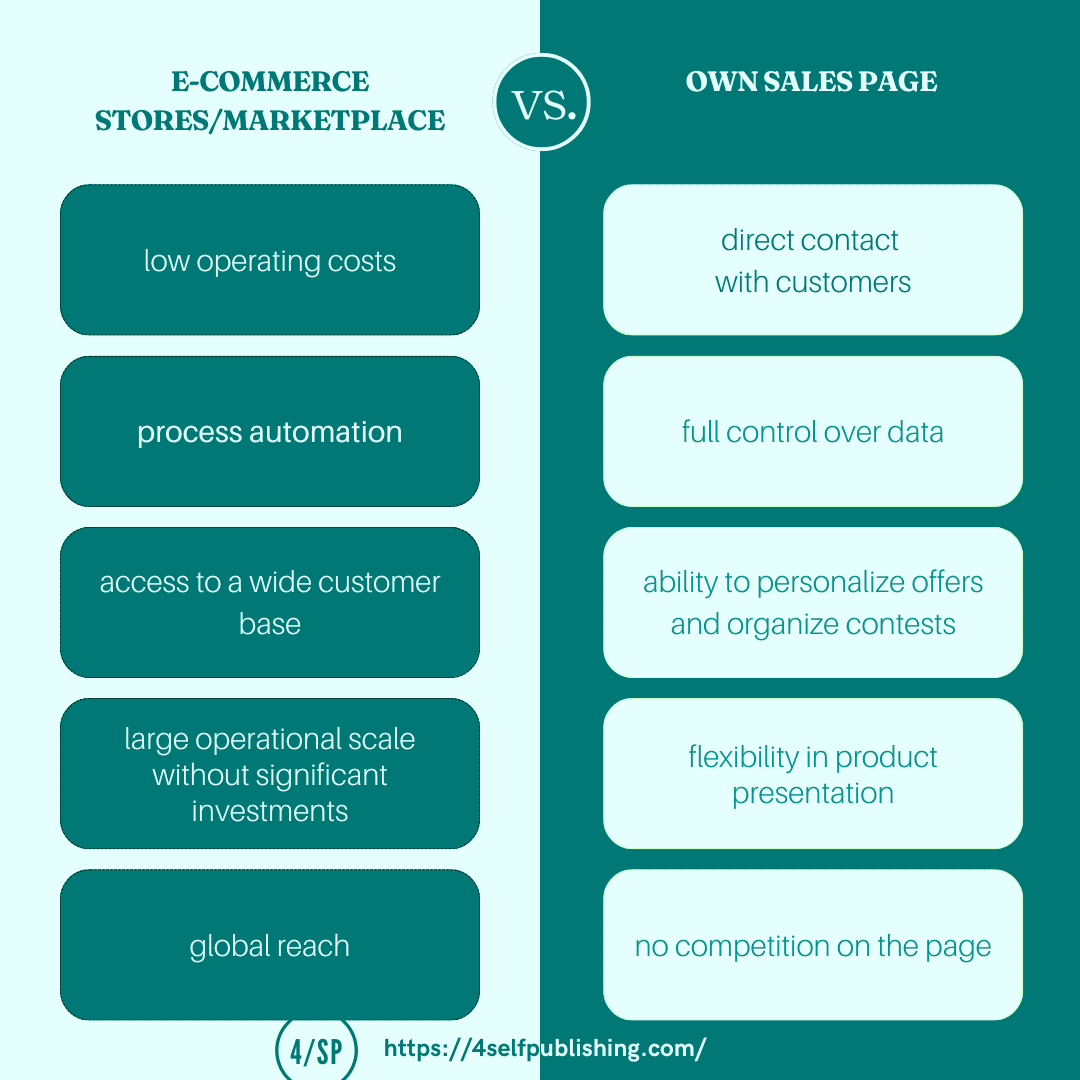
Let’s clarify that for this article, we will use the terms "e-commerce stores" and "marketplace" interchangeably.
Ask multiple people which option is better, and you’ll get different answers. Everyone has their preferences. That’s why in this article, we want to help you decide whether it's better for you to sell your book through e-commerce stores or if it would be more convenient to set up your own sales page.
As always, the answer isn’t simple. It all depends on what you need. It depends on how comfortable you are with sales, your resources, and how much time and money you can devote. In this article, you’ll find objective arguments for and against each solution. We won’t decide for you. We can offer guidance and provide research on the options, but the final decision is yours. There are no right or wrong answers when it comes to sales solutions. There are only those that work for you and those that don’t. However, if you’re the type who prefers to be told exactly what to do, then you might want to skip the rest of this article. You won’t find phrases here like "this is the best solution for you."
Also, remember that one disadvantage can lead to another, and similarly, benefits often connect. It’s not as if each argument stands alone without impacting others. Sometimes a benefit may be limited by other factors.
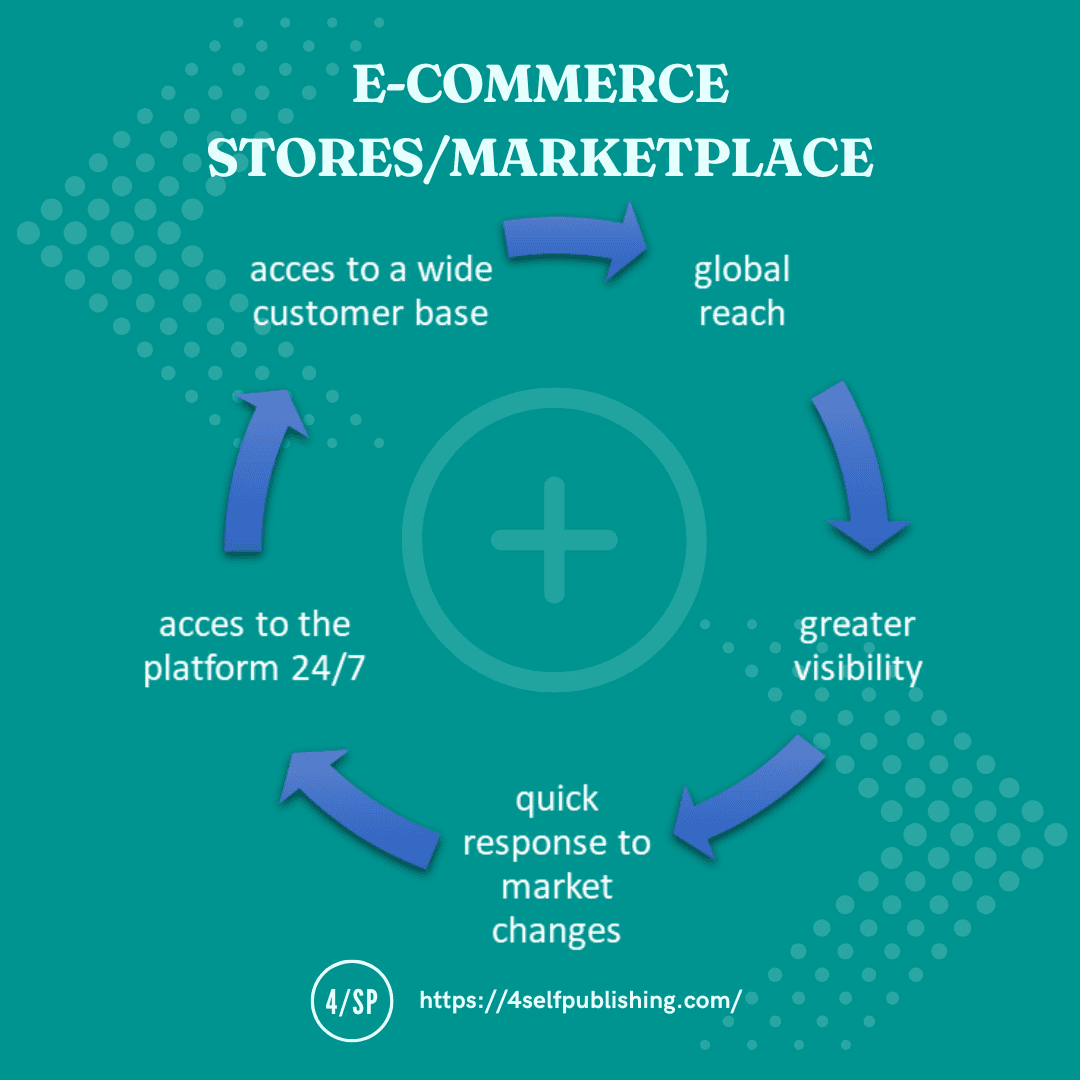
Pros of E-commerce/Marketplace
Pros of E-commerce/Marketplace
Let’s start with the main advantages that concern the view for your potential readers. Such stores often offer:
- Global reach;
- Greater visibility (e.g., large sales platforms).
As an author looking to sell your work, you have access to:
- Low operational costs;
- Options to customize your offer (making it easy to tailor products to the needs or preferences of buyers);
- Analytical tools;
- Process automation (e.g., payment or invoicing).
Other benefits that can be significant include:
- Access to the platform 24/7;
- Access to a broad customer base (the store's customer base).
There are also low costs and low investment requirements. With marketplace sales, you have:
- The opportunity to scale up without large investments in infrastructure;
- A quick response to market changes.
Cons of E-commerce/Marketplace
Like any solution, e-commerce stores also have downsides. The most commonly mentioned disadvantages involve cost:
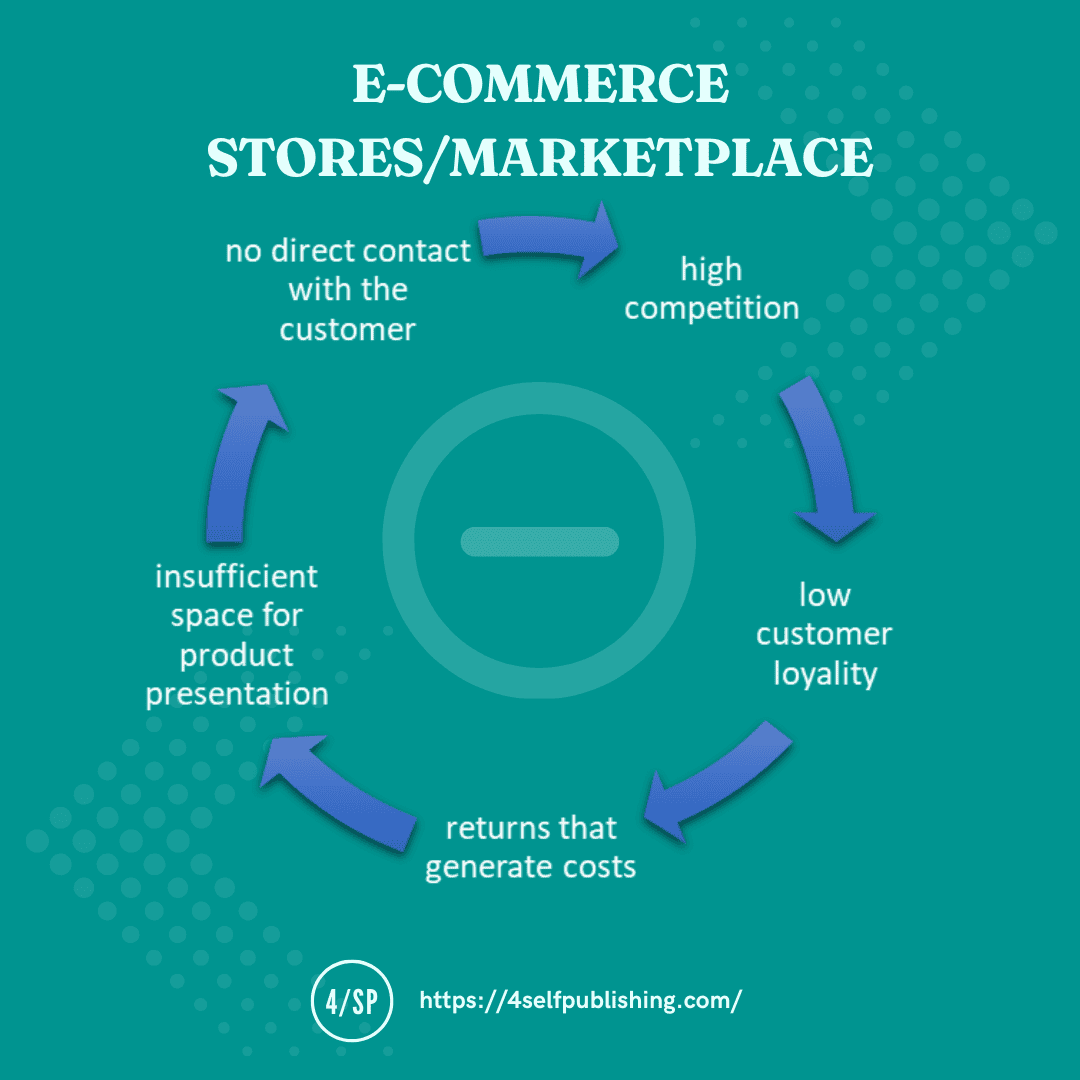
- High competition (which reduces your margin);
- You bear the logistics costs (shipping, product storage);
- Multiple commissions and fees that reduce your profit.
Additionally, your relationship with potential readers suffers. Don't deceive yourself; through stores filled with numerous products, you won't build trust or relationships. You lose:
- Customer loyalty (they seek the lowest price for products or services);
- Independence (your success depends on customer feedback).
Other cons include limits on how you present your product:
- Limited space to showcase your product;
- With less space, readers cannot sample the product (e.g., reading an excerpt) before buying;
- This point leads to returns, which incur costs.
Finally, control-related disadvantages:
- You’re dependent on policies and platform rule changes, which means you lack control over the platform where you sell;
- You may get tied up in complex international handling;
- There could be technical issues on the platform affecting you.
Your Own Sales Page
With your own sales page, where e-commerce stores have cons, your own page may offer positives. However, it’s not as simple as saying that one option’s cons are automatically offset by the other’s benefits. Many factors depend on your technical knowledge of different solutions.
Pros of Your Own Sales Page
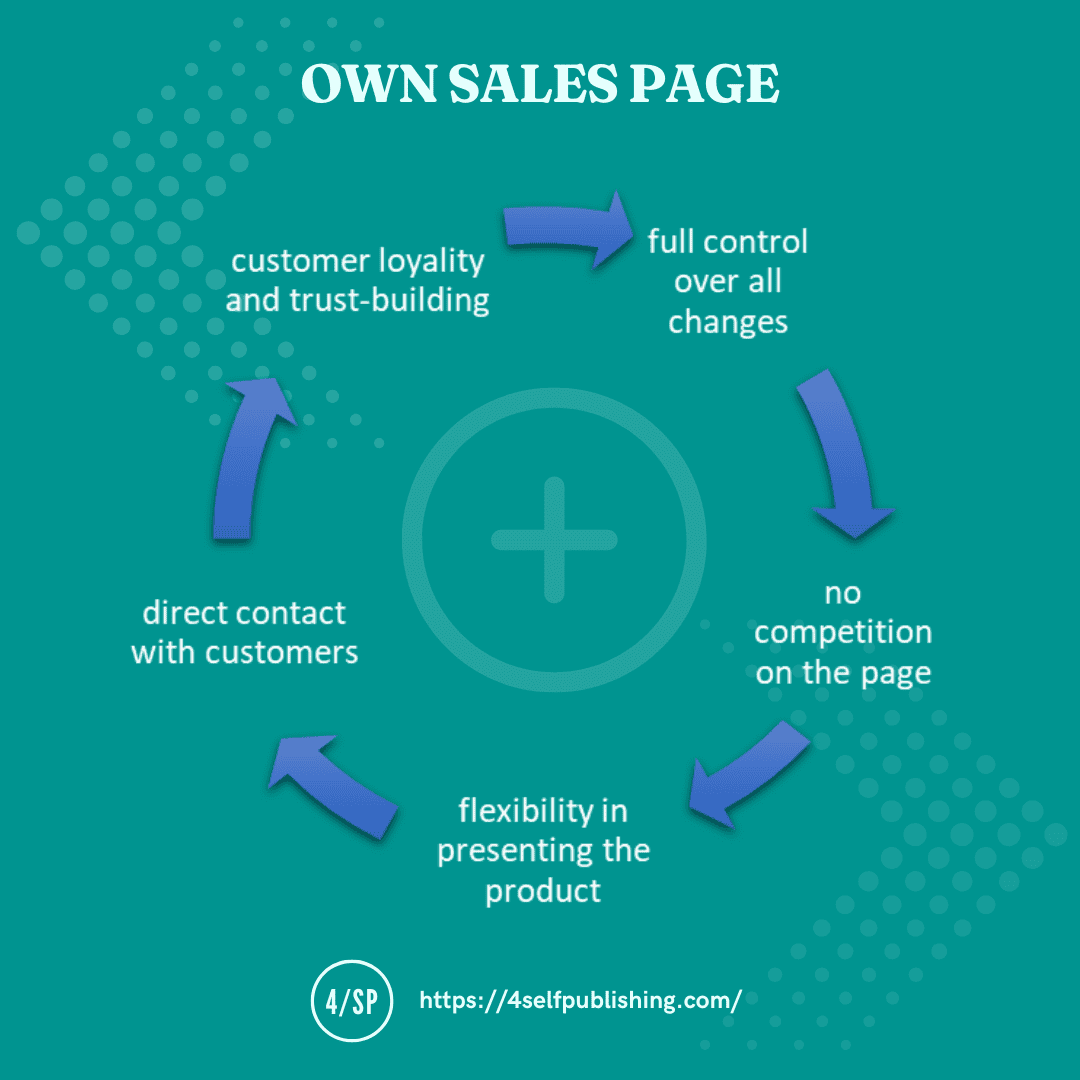
One of the first groups of advantages is complete control:
- Over your brand;
- Over SEO, SEM, performance, security, localization, UX/UI optimization (all this and more can be found in the article on optimizing your sales page);
- Over marketing tool integration;
- Over any changes (when you want to make them and how).
This complete control also allows you to create your loyalty system or hold contests. This is impossible with e-commerce stores. Another advantage is the ability to connect with readers:
- You have direct contact with customers;
- You can build trust (through direct contact).
What about data?
- You have complete control;
- This control allows you to personalize your offer for customers.
Another benefit is that you don’t pay commissions to intermediaries. You also gain in how you present your work on your own page:
- Flexibility in product presentation;
- No competition on the page (in e-commerce, other products may appear alongside yours);
- The ability to share excerpts;
- Branding, or creating positive associations with your product;
- No unnecessary elements on the page;
- A focus on clarity and simplicity;
- Reserved space for descriptions and presenting your ebook.
Cons of Your Own Sales Page
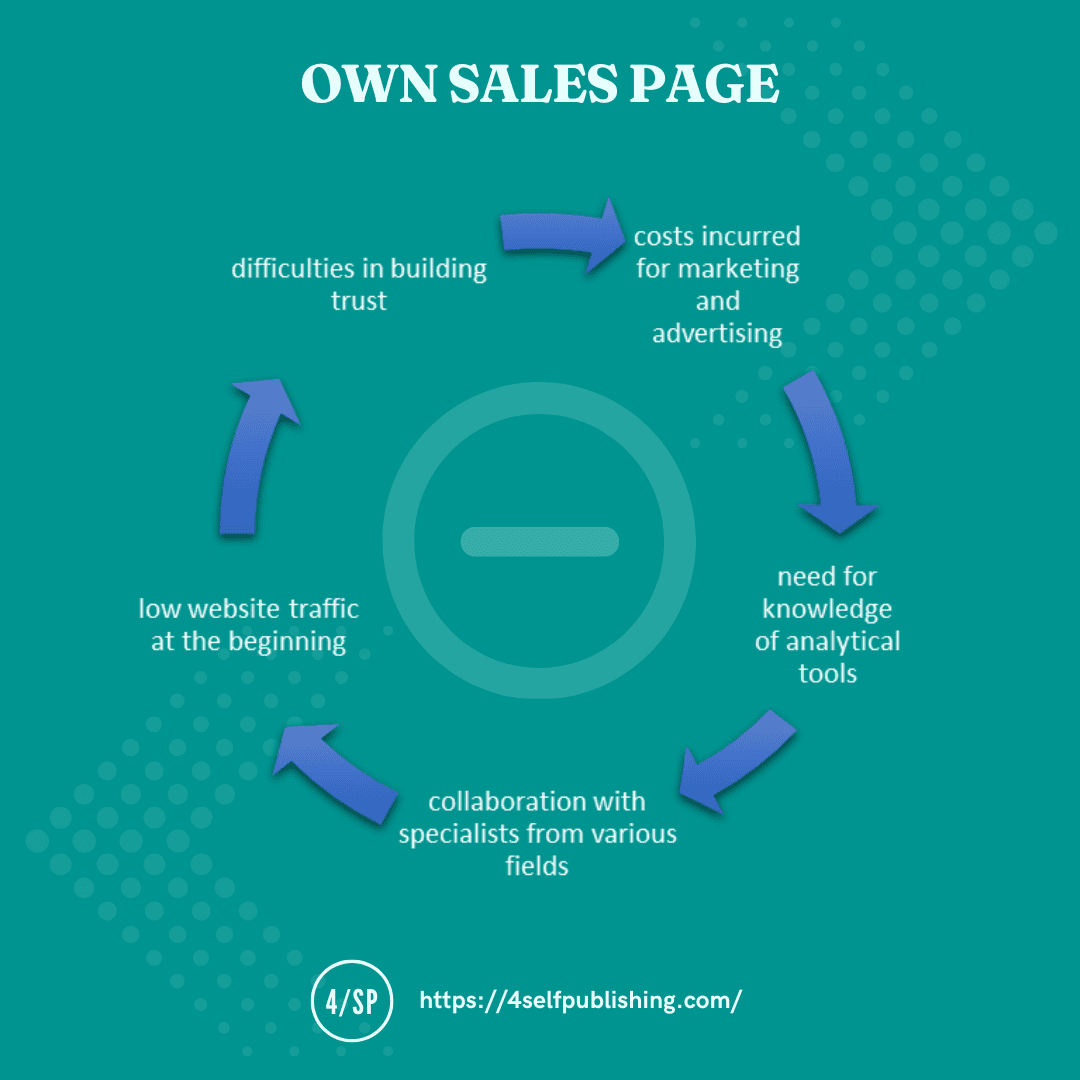
While the advantages look great, there are some downsides, as with everything. The first group of cons involves costs. These potentially low costs can become deceptive and significantly higher. Where are the cost pitfalls of your own page? In advertising and marketing. Good marketing and advertising specialists will be necessary. Another group of disadvantages ties into this: working with specialists, unless you can handle it all on your own. You might need help from specialists in:
- Traffic generation (which takes time; SEO, SEM, etc.);
- Functional support (invoicing, orders);
- Customer technical support;
- Analytics (SEO, Google Analytics, CRM);
- UX/UI, or the visual appeal of your page.
Finally, early trust-building challenges include:
- Lower initial trust in your product and in you;
- Lack of existing traffic (i.e., a customer base);
- Difficulties in building trust (lack of references, certifications, reviews).
As you see, both options have pros and cons. Everything depends on you, the time you have, what matters to you, and the financial resources you’re willing to invest in growing your personal brand and sales page.